
ABOUT
The Laboratory of Underwater Acoustic Measurements was established in 2000 in order to undertake high quality experiments either in its experimental tank or in the open sea, support the Wave Propagation group with laboratory experiments, expand the areas of interest of the Institute to other applications of ultrasound measurements and provide services to interested groups, agencies and companies.
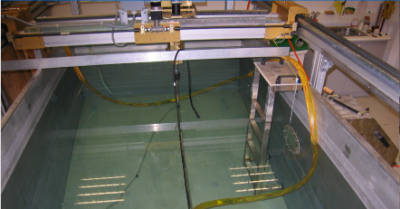
The laboratory applications include conduction of scaled ocean acoustic propagation experiments, bottom reconstruction experiments, layer identification and acoustic parameters estimation, calibration of acoustic sources and hydrophones, non-destructive testing of materials, as well as outdoor measurements, including localization experiments, measurements of acoustic signatures, ambient noise, shipping noise and bioacoustic measurements in the audible and ultrasound regime.
INFRASTRUCTURES
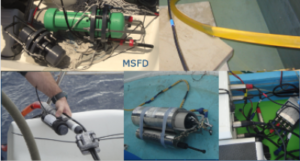
It’s Infrastructure for in situ (open sea) experiments includes a low frequency sound source, pingers, transponders and temperature and depth recorders, two towed array systems with three and two hydrophones respectively, omni-directional hydrophones suitable for use in the sea environment (10Ηz -280kHz) and autonomous underwater noise recorders developed and manufactured in the laboratory.
EQUIPMENT
- Open water tank (2.5×1.5×1.3 m) with an automatic positioning system providing 4+1 degrees
of freedom - Steel pressure tank (20 bars, Φ 300mm, 1.2m)
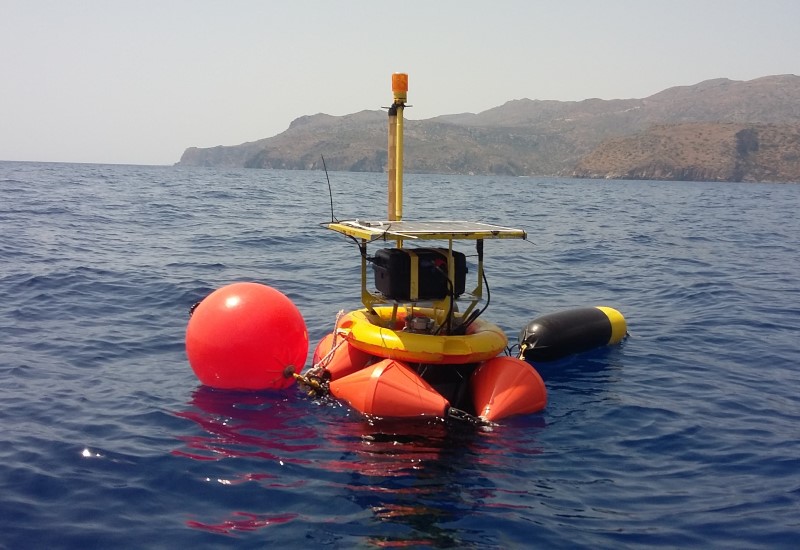
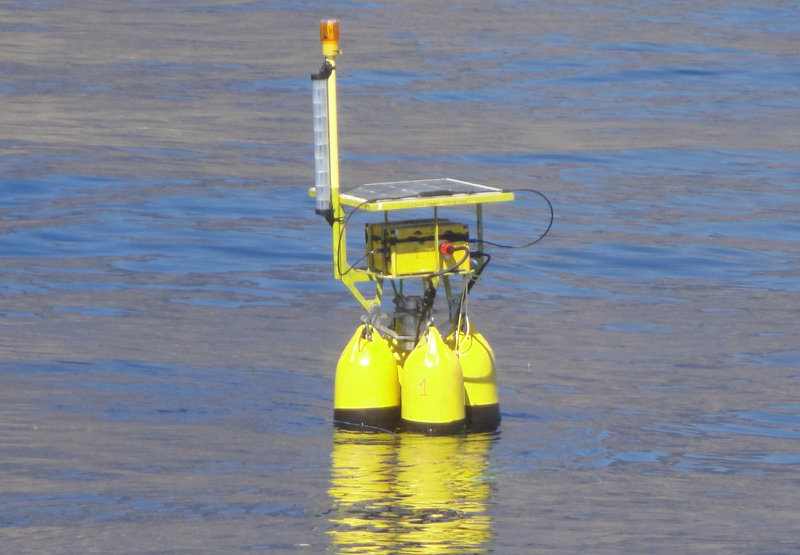
- Custom made Buoys
- One small tank (1.40 x 0.50 x 0.70 m)
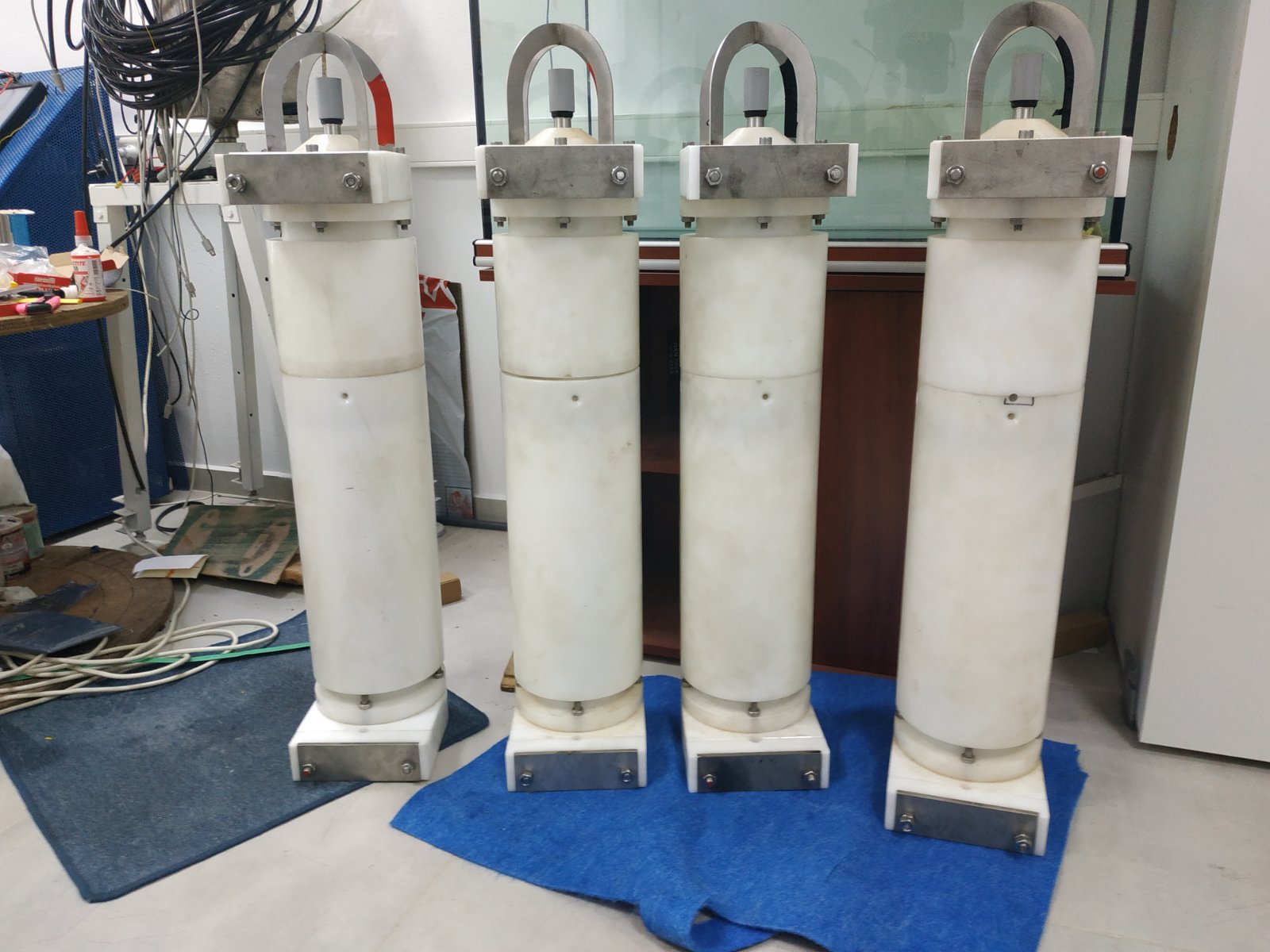
- 2 Autonomous Underwater Acoustic Recorders
- 4 Experimental models of auto-recording systems
- 2 High speed Data Acquisition cards (PC boards)
- 4 multichannel portable data acquisition cards
- 1 pulser-receiver
- 11 Hydrophones for use in the Laboratory and in the sea
- 4 Hydrophone towed array systems
- 22 Piezoelectric directional ultrasound transducers (500kHz-5MHz) for experiments in the tank
- 4 amplifiers (2 AC and 2 battery powered)
- 3 Waveform generators (One of them portable)
- One acoustic source (250 Hz – 20.000 Hz) with its amplifier
- One, 4 channel oscilloscope
- 4 Temperature and Depth Recorders (TDR) for use in the sea
- 1 Deep sea Temperature and Depth Recorder
- 2 pingers and two transponders for use in sea experiments
- One deep sea pinger
- Computer Infrastructure (desktop/portable)
RESEARCH & DEVELOPMENT ACTIVITIES
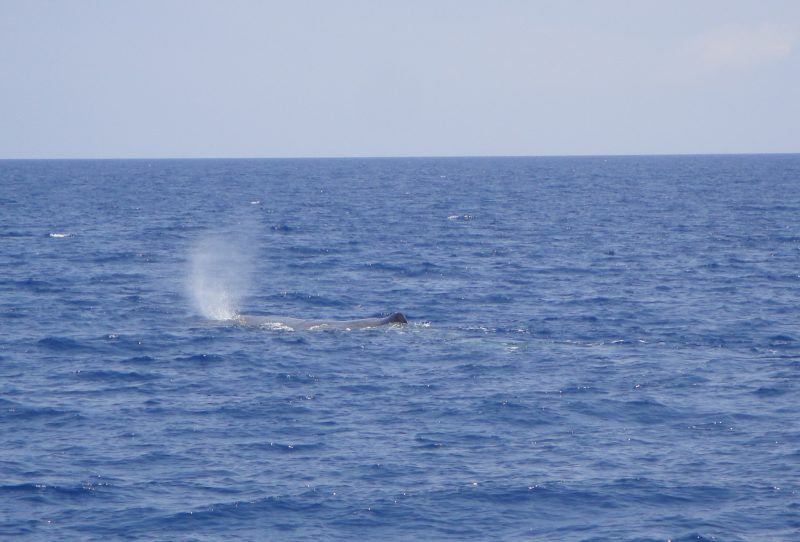
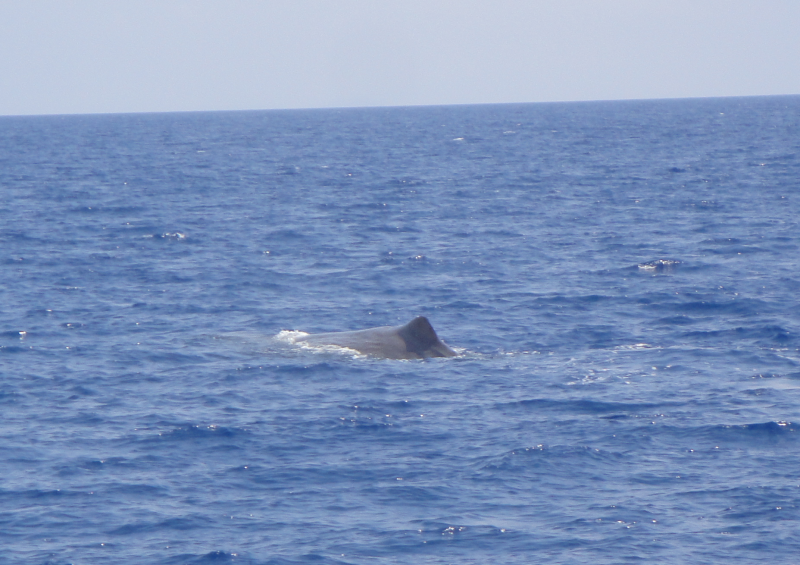
Specifically, within the framework of the SaveWhales program, it has developed and operated a pilot system for the detection and localization of cetacean mammals (sperm whales) in real time in the sea of Southwestern Crete, while informing the MarineTraffic maritime traffic platform to alert the vessels in the area to avoid collisions. The system was first put into trial operation from July to September 2020 and in normal operation from May to September 2021.
Within the framework of the QuietMed program, an autonomous underwater environmental noise recorder was developed, constructed and calibrated. The recorder was used in pilot experiments conducted near Heraklion, Crete and Southwestern Crete near Paleochora, Chania. The experiments had either a short duration (2-3 hours) or a medium duration (3-8 days).
CONTACT US
For any information regarding the Laboratory please contact:
Panagiotis Papadakis,
Underwater Acoustic Measurements Laboratory,
Institute of Applied and Computational Mathematics,
Foundation for Research and Technology – Hellas
Nikolaou Plastira 100, Vassilika Vouton,
GR 700 13 Heraklion, Crete, GREECE
E-mail: panos@iacm.forth.gr
Tel: +30 2810 391786 (office), +30 2810 391885 (lab)